Touch rugby gives you most of what the game demands: the pass before contact, the angle of a running line, the fitness to keep going. What it can't give you is the moment a shoulder meets your ribs, or the first time you have to make a decision at speed with someone closing on you. That gap is smaller than it looks, and it closes with repetition rather than courage.
Start with readiness, not bravery
Stepping up to tackle is usually treated as a mental test. It's mostly a technical and physical one. If you tackle with your head in front of your feet, or you reach with your arms instead of driving with your legs, contact will feel bad because it is bad. Fix the mechanics and the fear drops away on its own.
Before your first live session, be honest about three things:
- Body height. Standing tall into contact means taking the hit in your chest and neck. Work on getting low early — hips down, eyes up, feet under you.
- Footwork and falling. You need to get close to a moving target without stopping, and to land on your side rather than your shoulder or head when you go to ground.
- Neck and shoulder condition. General strength work helps, and a qualified coach can show you safe progressions. If you've had a neck, shoulder or back injury, get clearance from a doctor or physio before you start contact. Take that seriously — the short delay is worth it.
A four-week progression
Four weeks is a rough shape, not a rule. Move to the next step when the previous one starts to feel dull rather than frightening.
- Week one: no opponent. Tackle bag and pad work only, at walking pace. Learn the shape of a tackle — shoulder into the target, head to the side, arms wrapping and squeezing, legs driving. Twenty reps each side, then stop. Finish with ten minutes of falling practice on a mat or soft grass.
- Week two: static contact. A partner holds a pad or stands still while you tackle at walking pace, then jogging pace. Agree beforehand who is tackling and how hard. Then swap. This is rehearsal, not competition.
- Week three: controlled live. Small groups, small spaces, one tackle allowed per possession — something like 3v3 in a 15-metre channel. Keep the bursts short and the rests long enough that technique doesn't fall apart.
- Week four: full contact, still constrained. Live play in short bursts, restricted to a narrow channel so nobody can build up a long run. Cap the total contact time in a session. When you get tired, technique goes first and injuries follow, so stop while you still feel sharp.
Drills that do the heavy lifting
Tackle bag, low to high
Start on your knees facing the bag to isolate the shoulder contact and the wrap. Then stand, step in close, and drive with your legs. Keep your feet near the bag rather than reaching for it with your arms — reaching is how shoulders get hurt.
Grappling from the knees
Thirty-second wrestles on a mat, starting from your knees, with the aim of getting to your feet or on top. It feels awkward at first, and that's the point: you learn what a resisting body feels like and how to stay balanced with someone hanging off you.
Being tackled
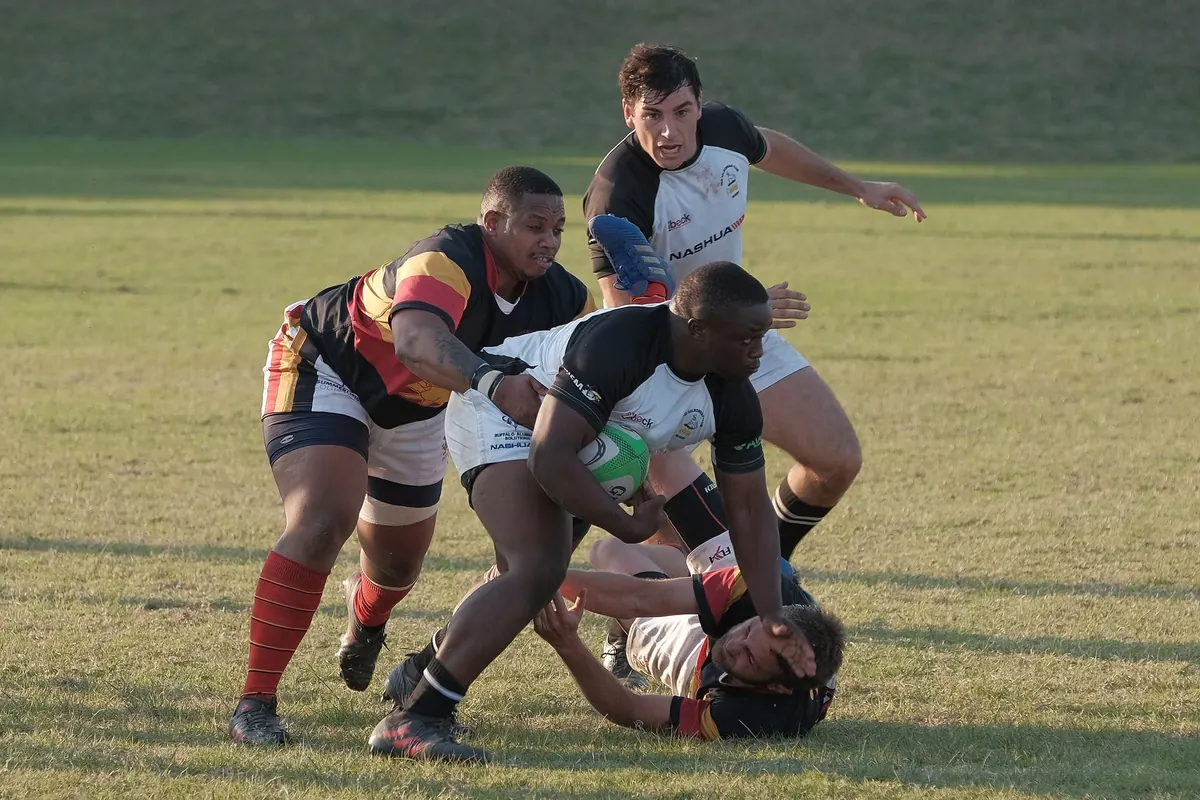
Beginners practise tackling far more than falling. Learn to go down on your side, keep your chin off your chest, and get straight back to your feet and into the next play. Time spent on the ground removes a lot of hesitation at the moment of contact.
What to do when you flinch
Everyone flinches. It's a reflex protecting your face, not a character flaw. You can train it down by keeping the speed under control — you set the pace with your partner, and you're allowed to say "slower". Breathe out as you make contact. Keep your eyes open, because closing them means you can't adjust your height or your angle. Repeat at a level you can handle until it becomes boring, then nudge the speed up a notch.
Your first full-contact session
Turn up early and warm up properly. Check that your mouthguard fits well; a loose one will have you hesitating before you've even started. Tell the coach it's your first contact session so they can pair you sensibly. Aim for clean technique rather than a big hit — a good tackle puts the ball carrier down and leaves you on your feet. Keep that first session short and finish while it still feels enjoyable. If you feel unwell or dizzy, or you have neck pain, stop and get it checked by a medical professional.
The long game
Progress shows up in small ways. You stop bracing before contact. You get back to your feet without thinking about it. You take a hit, present the ball, and play on. Those moments are worth noticing. Strength work in the gym supports the neck and shoulders, and sleep supports everything else. Contact is a skill you build, like passing or kicking. Give it a month of patient reps and touch rugby starts to feel like the warm-up for it.
Photo: TheOtherKev / Pixabay